
Ways to Keep Kids Busy While You Read the Bible Aloud

Simple ideas for busy hands during family Bible time
Sometimes my kids can sit and listen quietly while I read.
Other times they seem to hear the words “Bible time” and immediately remember seventeen reasons they need to get out of their chair.
Someone needs water.
Someone needs a snack (even though we just finished breakfast)
Someone suddenly notices a pencil on the other side of the room that they desperately need to sharpen.
If this sounds familiar, there are a few things that have helped in our home.
One of the simplest has been giving my kids something quiet to do with their hands while I read aloud.
Busy hands makes better listeners
It can be easy to assume a child has stopped paying attention because they are coloring, rolling Play-Doh, or moving around a little. But it's actually the opposite. Kids can actually focus better when their hands are busy.
I've learned this when I ask my kids a question (expecting to catch them off guard) but realize they were listening the whole time!
The key for me is choosing activities that are quiet, simple, and independent enough that I can continue reading without constantly stopping to help.
Here are a few of my favorites.
For younger kids
Play-Doh
Play-Doh is simple, quiet, and keeps little hands occupied for quite a while.
You can let them create whatever they want, or occasionally give them something from the lesson to make.
If you are reading about Noah, maybe they can make an animal or an ark.
If you are studying Creation, they might make something God created.
It doesn’t have to become another assignment, but free play can be exactly what they need to focus and listen better.
Chunky crayons
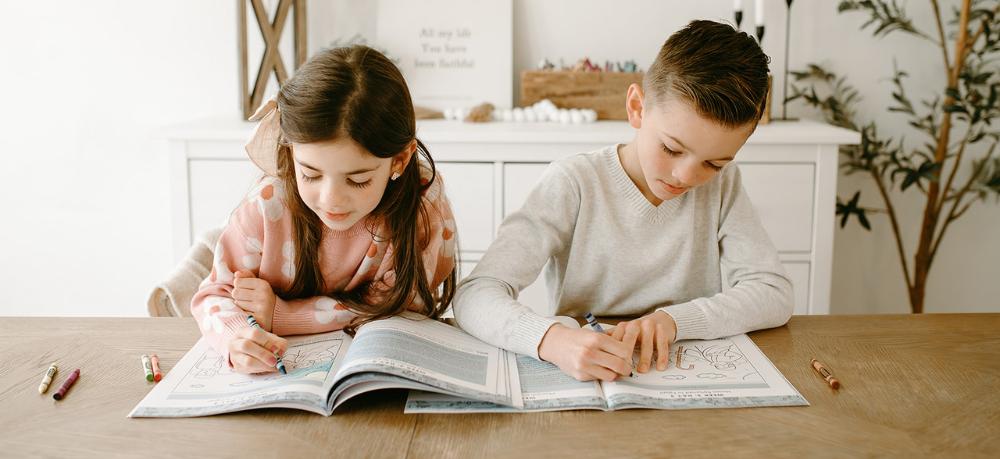
Large crayons are easy for younger children to manage independently.
Give them plain paper, a simple coloring page, or something connected to the passage you are reading.
They can color while they listen without needing much direction from you.
Stickers
A sheet of stickers and blank paper can buy you more quiet Bible-reading time than you might expect.
Younger children can create pictures, scenes, or just happily cover a page in stickers while you continue the lesson. I also like sticker by letter or number books (but be careful because it can cause you to have to help if they don't know their numbers and letters perfectly.)
A special Bible-time basket
Keep a small basket of quiet toys that only comes out during Bible time.
You might include:
- Small wooden animals
- Magnetic blocks
- Lacing cards
- Quiet fidget toys
- Reusable sticker books
- Simple puzzles
Keeping these items separate from everyday toys makes the basket feel special.
Over time, your children begin to recognize the routine. They will learn to look forward to that time of special toys and know that you will be reading God's Word together.
That familiar rhythm can make Bible time easier for everyone.

For older kids
Older children usually need something a little more involved.
I try to choose activities they can complete independently so I’m not answering craft questions every thirty seconds while trying to read. I also don't want them reading something else while I am trying to read to them.
Coloring pages
Older kids may still enjoy coloring, especially if the page connects with what they are learning.
Detailed pages can keep their hands busy without pulling their attention too far away from the lesson.
Word searches
Word searches are another easy option.
They require enough concentration to keep hands and eyes occupied, but kids can still listen while they work.
I especially like using words from the lesson because it gives them another opportunity to interact with names, places, and ideas from Scripture.
Paints and paper
For a child who enjoys art, watercolor paints can work beautifully during read-aloud time.
Set everything out before you begin so they don’t need your help once you start reading.
Again, this can be connected to the lesson or completely open-ended.
Simple note-taking or drawing
Some older children enjoy drawing something they hear in the passage.
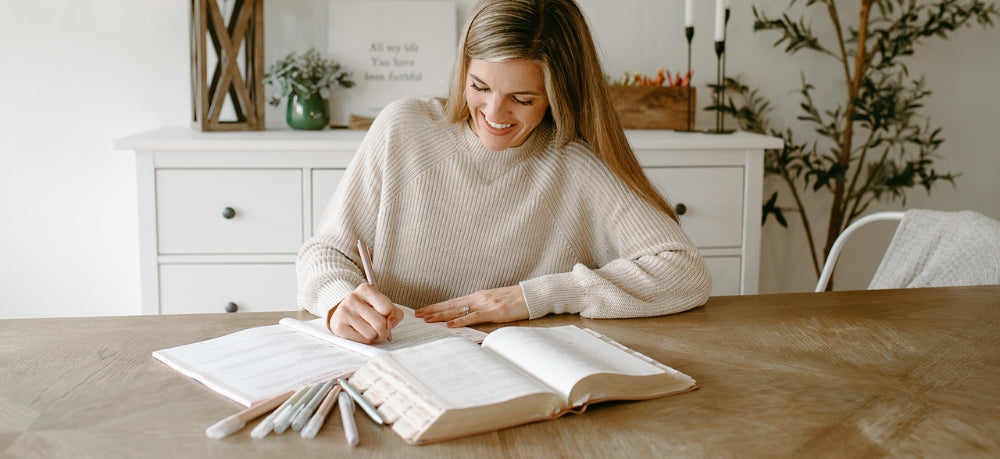
Others may want to write down a verse, a question, or something they want to remember.
You can experiment and see what helps your child listen best.

Ask them what they remember afterward
After you finish reading, ask a simple question:
“What do you remember?”
“What happened in today’s passage?”
“What stood out to you?”
“Can you tell me the story back in your own words?”
You may be surprised.
A child who appeared completely absorbed in a coloring page may give you a detailed answer.
Narration is such a helpful way to see what children actually understood without turning Bible time into a test.
Set everything out before Bible time begins
A little preparation goes a long way here.
If possible, choose the activities before everyone sits down.
Put crayons on the table.
Have the Play-Doh ready.
Fill the quiet basket.
Print the coloring page.
Set out the pencils.
Once you start reading, you want to be able to keep going.
Stopping every few minutes to find scissors or refill paint water can quickly change the tone of your Bible time. Ask me how I know :)
Give different children different activities
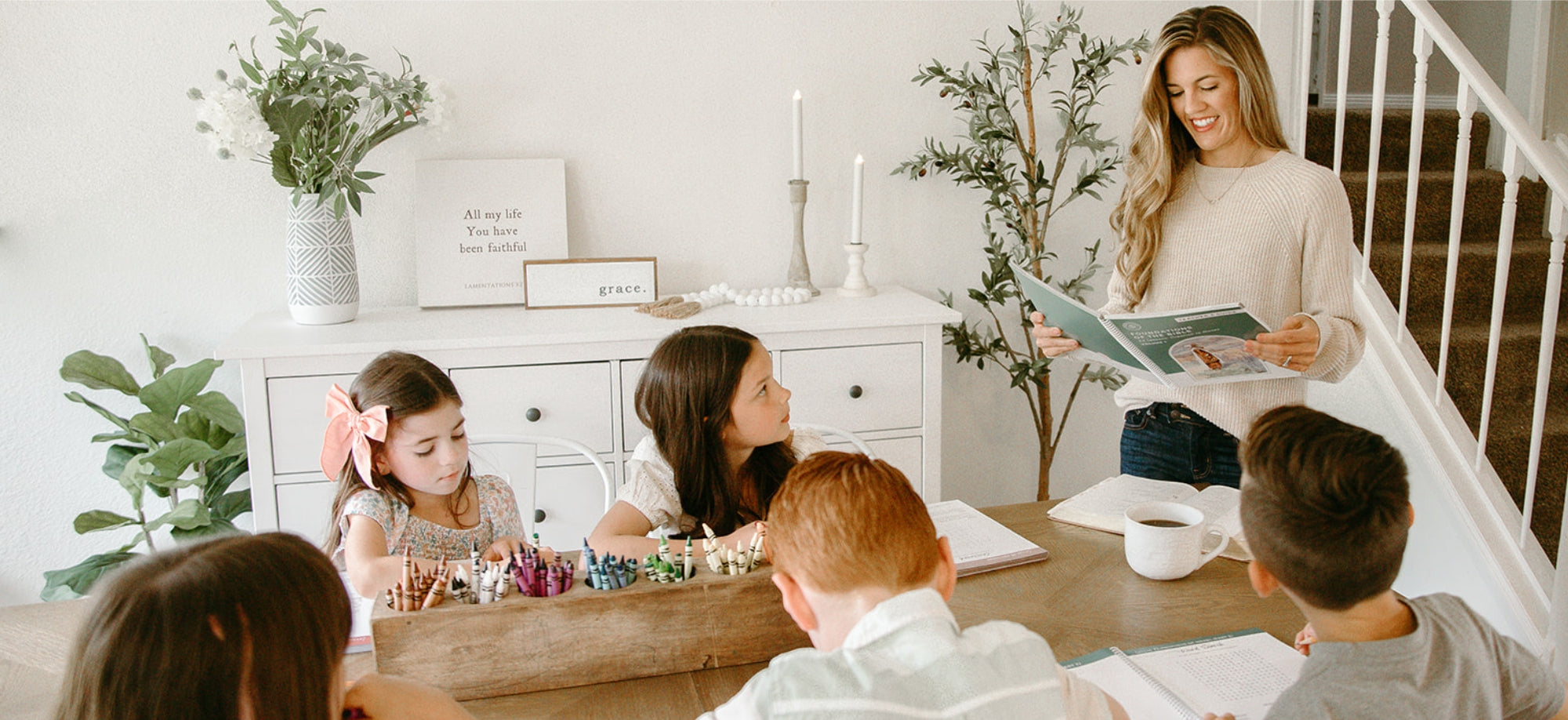
Family Bible study does not require every child to be doing the exact same thing.
Your preschooler might play with wooden animals.
Your seven-year-old may color.
Your ten-year-old could work on a word search.
Your teenager may simply follow along in their own Bible.
You are all hearing the same Scripture together, even when everyone’s hands are doing something different.
That flexibility is one of the reasons I love studying the Bible as a family.

This is why Foundations includes activity books
When I created Foundations of the Bible, I knew many families would be using one study with children at several different ages.
The activity books were designed to make that easier.
Each week includes two coloring pages that younger children can work on while you teach.
There is also a word search for older children and narration pages at the end of the week where kids can tell you what they learned in their own words.
Don't just take my word for it, read what other moms are saying!


I love hearing this because family Bible study can include young children while still going deep into Scripture.
Which Foundations volume should you choose?
If you want to study the Old Testament, choose Volume 1 or Volume 2.
Volume 1: Creation to Moses
Volume 2: Judges to Jesus
If you want to study the New Testament, choose Volume 3.
Volume 3: Gospels to Revelation
Families using Classical Conversations can choose the volume that corresponds with the cycle they are studying.
Each study is open-and-go, so you can sit down, open the lesson, and begin.

Your Bible time can be a little wiggly
Some days everyone will listen beautifully.
Some days someone will spill the crayons, another child will need a snack, and you’ll reread the same sentence three times.
Keep opening the Bible.
Give those little hands something to do.
Talk about what you learned.
Those ordinary mornings around the table are giving your children repeated opportunities to hear the Word of God, ask big questions, and grow their faith a day at a time.
That is time well spent.


